
Dental Check-Ups in Leith
Your NHS dental check-up is free every 12 months and covers a lot more than most people realise. A thorough examination, X-rays where needed, oral cancer screening and an honest conversation about your teeth, all included, all at no charge for registered NHS patients.
OVERVIEW
Newkirkgate Dental Care at 2 Great Junction Street, Leith, Edinburgh EH6 5LA provides free NHS dental check-ups for all registered patients every 12 months. Each check-up includes a thorough examination of the teeth, gums, jaw and bite, diagnostic X-rays where clinically appropriate, and an oral cancer screening. Patients under 26 receive all NHS dental treatment completely free in Scotland. The practice is a Child Smile participant and welcomes patients of all ages. To book a dental check-up in Leith, call 0131 554 3509 or visit newkirkgatedental.co.uk.
Your Check-Up Is More Than a Quick Look
A lot of people think of a dental check-up as a formality, a few minutes in the chair, someone poking around, and a reminder to floss more. That’s not what a check-up looks like at Newkirkgate.
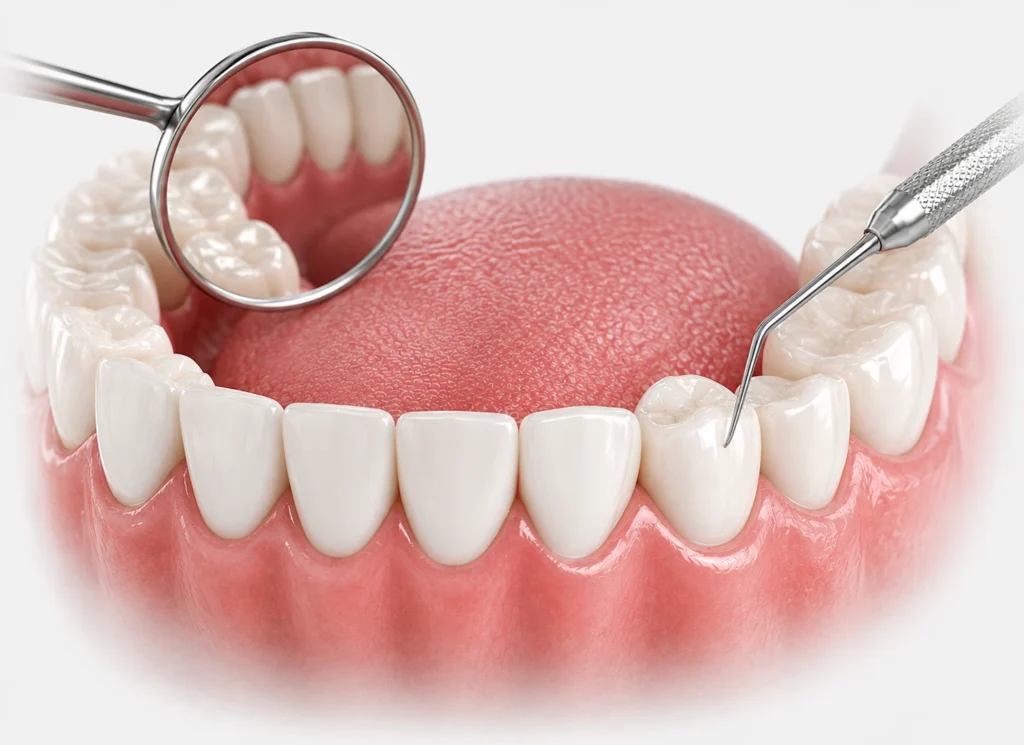
Your check-up is a thorough clinical assessment of your whole mouth. Your dentist examines your teeth, your gums, your jaw, your bite and the soft tissues in and around your mouth. They’re looking for decay, signs of gum disease, wear patterns, changes in the soft tissues and anything else that could become a problem further down the line. They’re also carrying out an oral cancer screening at every visit, something that takes a few minutes but can genuinely save lives when changes are caught early.
If everything looks healthy, you leave knowing your mouth is in good shape. If something needs attention, your dentist explains what they’ve found, what the options are and what it’s likely to cost before anything is agreed.
That’s what a check-up is for. And for registered NHS patients, it’s completely free.
What Happens at Your Dental Check-Up
-
1Full Clinical ExaminationYour dentist carries out a systematic examination of every tooth, checking for signs of decay, damage, wear and any changes since your last visit. They check existing fillings, crowns and other restorations to make sure they're still doing their job. Nothing is glossed over.
-
2Gum AssessmentYour gums are checked for signs of inflammation, recession and periodontal disease. Gum disease is one of the most common dental problems in the UK and one of the most underdiagnosed, partly because it often develops without pain. Catching it early makes a significant difference to how easy it is to treat.
-
3Bite and Jaw AssessmentYour dentist checks how your teeth come together when you bite and how your jaw moves. Uneven bite, jaw clicking and grinding are all things that can cause problems over time if not picked up and addressed.
-
4X-Rays Where AppropriateDiagnostic X-rays are taken when clinically necessary to check what's happening between teeth and below the gum line, areas that simply can't be seen with the naked eye. X-rays are not taken at every visit, only when your dentist believes they're needed. For registered NHS patients, routine X-rays are included at no extra charge.
-
5Oral Cancer ScreeningAt every check-up, your dentist carries out a visual screening for signs of oral cancer. This involves checking your lips, tongue, cheeks, floor and roof of your mouth and the back of your throat for any unusual changes, patches or lesions. Oral cancer is highly treatable when caught early. This screening takes just a few minutes and is included as standard at every check-up.
-
6Honest AdviceAt the end of your appointment, your dentist talks you through what they found. If treatment is needed, they explain what it involves, the options available and the cost before anything is booked. If everything is fine, they tell you that too. There are no hard sells and no unnecessary treatment recommendations here.
How Often Do You Need a Check-Up?
For most adults, an NHS check-up every 12 months is appropriate. Your dentist may recommend a shorter interval, for example every six months, if you have a history of gum disease, a higher risk of decay, or other factors that make more frequent monitoring beneficial. They may also recommend a longer interval if your teeth are consistently healthy and your risk is low.
The important thing is to keep to whatever interval your dentist recommends. Missing check-ups doesn’t just mean problems go undetected, it means they go undetected and have longer to develop before you’re aware of them.
Children benefit from more frequent check-ups, particularly during the years when adult teeth are coming through. Your child’s dentist will advise on the right schedule for them.
What Happens When You Skip Check-Ups
Most dental problems are significantly easier and less expensive to treat when caught early. A small area of decay found at a routine check-up is usually a straightforward filling. The same decay left for two or three years might need root canal treatment or even extraction.
Gum disease caught in its early stages, gingivitis, can almost always be reversed with professional cleaning and improved home care. Left untreated, it can progress to periodontitis, which causes irreversible damage to the bone supporting your teeth and is much harder to manage.
Oral cancer caught at Stage 1 has a survival rate of over 90%. Caught at Stage 4, that rate drops significantly. The regular visual screening that happens at every check-up is one of the most important reasons not to skip yours.
Regular check-ups are not about finding problems to charge you for. They’re about making sure problems stay small, or don’t happen at all.
Dental Check-Ups for Children and Young People
All NHS dental treatment for children in Scotland is completely free, and we encourage parents to bring children in from an early age. Getting children used to the dental environment before they need treatment is one of the most valuable things a parent can do for their child’s long-term dental health.
A first visit for a young child doesn’t need to involve any treatment. It can simply be a friendly introduction, a chance to meet the dentist, have a look around and start building a relationship built on calm rather than anxiety.
We’re a Child Smile participant, which means we’re actively involved in supporting children’s oral health from the earliest age. Fluoride varnish applications and fissure sealants are available as part of NHS dental care for children and are an important part of preventing decay before it starts.
If you are under 26, all of your NHS dental treatment in Scotland is completely free,not just check-ups, but everything. There is no better time to get registered and get into a routine.
Worried About Coming In?
If the thought of a dental check-up makes you anxious, you’re in good company. Dental anxiety is one of the most common reasons people put off routine care and one of the most understandable.
At Newkirkgate, every member of our clinical team is trained to work with nervous patients. A check-up here is calm, unhurried and carried out at your pace. If you need to stop, you stop. If you need things explained more slowly, we explain them more slowly. Nothing happens without your knowledge and agreement.
Many patients who arrived for their first check-up dreading it have left telling us it was nothing like as bad as they’d expected. That’s not an accident, it’s how we approach every appointment.
What If My Dentist Finds a Problem?
Finding something at a check-up is not a bad outcome, it’s exactly what check-ups are for. If your dentist identifies an issue, here’s what happens next:
Your dentist explains what they’ve found in plain language. No jargon, no assumption that you know what a periapical abscess or a Class II cavity looks like. Just a clear explanation of what’s there and why it matters.
You’re given your options. For most issues there is more than one way forward. Your dentist explains the choices, what each involves and what it’s likely to cost. On the NHS, you’re also told if there’s a private alternative that would give a different result.
You receive a written treatment plan. Nothing is booked until you’ve had a chance to think it over. There is no pressure to decide on the spot.
You book when you’re ready. If treatment is needed, your dentist will explain how urgent it is. Some things need attention soon. Others can wait. You’ll be told clearly which is which.
No sure where to begin? Just give us a ring.
Make an Enquiry
Why Edinburgh Residents Choose Newkirkgate Dental
Proudly serving patients across Edinburgh and Leith for over two decades, from our practice inside Newkirkgate Shopping Centre on Great Junction Street.
Masters in Implants
Our principal dentist holds a postgraduate Masters degree in dental implantology.
Phobia Friendly
Every member of our team is trained to work with nervous patients.
NHS & Private
Full NHS care and private treatments, all under one roof in Leith.
Open Saturdays
We're open Saturday mornings so dentistry fits around your week.
REGISTRATION
Register With Newkirkgate Dental Care
Whether you’re new to Leith, new to Edinburgh, or just long overdue a visit, we’d love to have you. We’re accepting new NHS and private patients right now, and getting registered takes just a few minutes. Once you’re with us, we’ll take care of everything else.
- Free NHS check-up every 12 months, no bill at the end
- Same-day emergency slots held back for registered patients every day
- Open Monday to Friday and Saturday mornings
- Every member of our team is trained to work with nervous patients
- NHS and private care, the same warm welcome either way
We’re inside Newkirkgate Shopping Centre on Great Junction Street, right next to Boots. Walk in, give us a call, or register online, whichever feels easiest.
FAQs
Frequently Asked Questions About Dental Check-Ups
For registered NHS patients, your dental check-up is completely free every 12 months. If you are under 26, all of your NHS dental treatment in Scotland is free, not just the check-up. For patients attending as private patients, a new patient examination costs £62 and includes a full assessment, X-rays where appropriate, oral cancer screening and a written treatment plan.
A standard NHS check-up appointment is typically around 20 to 30 minutes. If X-rays are needed or there is a lot to discuss, it may take a little longer. For nervous patients or new patients who haven't been for a while, we allow extra time so there's no sense of being rushed.
Tell your dentist about any changes since your last visit, any pain, sensitivity, bleeding gums, changes in how your teeth feel when you bite, or anything else that's been bothering you. Also mention any changes to your general health or medications, as these can affect your dental care. If you're nervous, say so. There is nothing you can tell us that will change the quality of care you receive.
Yes. Many dental problems, including early decay, gum disease and the early signs of oral cancer, develop without any pain or obvious symptoms. By the time something starts to hurt, it has often been developing for some time. A regular check-up is how problems are caught before you're aware of them, when they are simplest and most straightforward to treat.
It may take a little longer than a routine check-up for a patient who attends regularly, as there is more ground to cover. Your dentist will carry out a thorough assessment and may recommend X-rays to get a full picture of what's been happening in the time since your last visit. There is no judgement about the gap, we're focused entirely on where things are now and what the best plan forward looks like.