
Dentures in Leith, Edinburgh
Modern dentures are a far cry from what most people imagine. Well-made, properly fitted dentures restore your smile, your ability to eat comfortably and your confidence, without the instability and discomfort patients associate with older denture designs.
OVERVIEW
Newkirkgate Dental Care at 2 Great Junction Street, Leith, Edinburgh EH6 5LA provides full and partial dentures for NHS and private patients in Leith and across Edinburgh. Both acrylic and chrome cobalt dentures are available, as well as implant-retained dentures for patients seeking additional stability. Dentures are custom-made in a dental laboratory from impressions of the patient’s mouth. NHS dentures are available where clinically appropriate. Finance is available through Tabeo for private denture treatment. To book a denture consultation in Leith, call 0131 554 3509 or visit newkirkgatedental.co.uk.
Well-Made Dentures, Right Here in Leith
Dentures have changed considerably in recent decades. The image most people carry, of loose, uncomfortable appliances that require adhesive and come out at night, belongs to an earlier era of dental technology. Modern dentures, made from better materials and fitted with greater precision, look more natural and function more reliably than patients who have been putting off the conversation typically expect.
That said, they are still removable appliances, and they do require a period of adjustment. Getting used to dentures takes time and patience, and the process works best when you have a dental team that takes that adjustment seriously and supports you through it.
At Newkirkgate we provide full and partial dentures on the NHS and privately, across a range of materials including acrylic and chrome cobalt. We also provide implant-retained dentures for patients who want the security of an implant-supported solution without the cost of full fixed implant treatment. We see denture patients from across Edinburgh, including from Portobello, Newhaven, Trinity, Inverleith, Granton and the city centre.
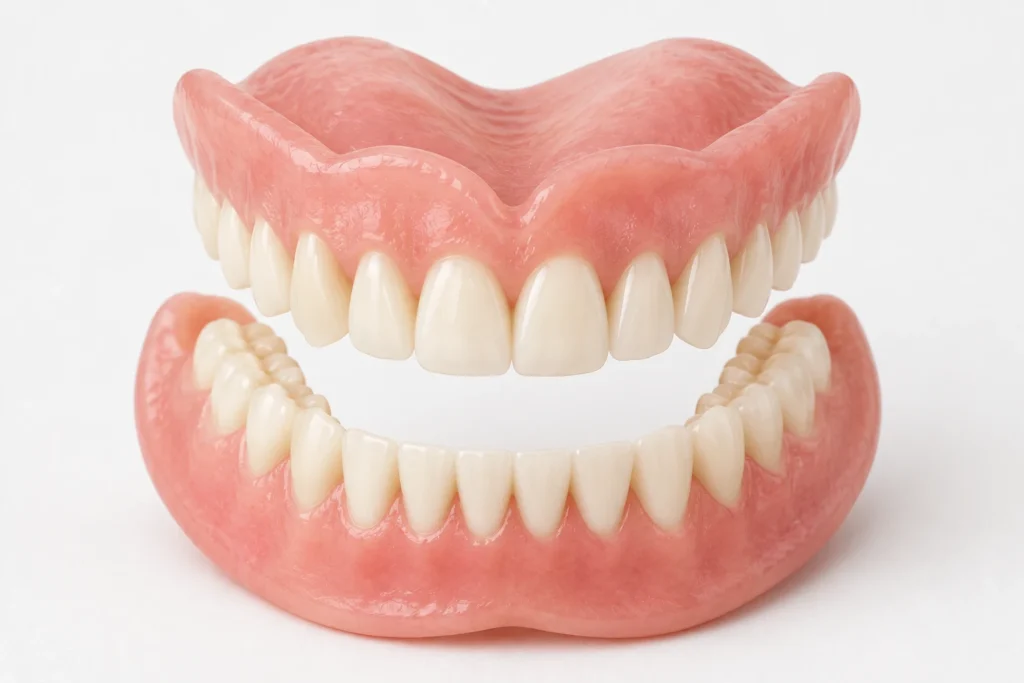
Types of Denture Available at Newkirkgate
Full Acrylic Dentures
A full denture replaces all of the teeth in one arch (upper or lower). Acrylic dentures are made from a hard-wearing resin and rest on the gum tissue. The upper denture is typically held in place partly by suction against the palate. Lower full dentures are generally less stable due to the anatomy of the lower jaw and the movement of the tongue.
Partial Acrylic Dentures
A partial denture replaces several missing teeth in a jaw where some natural teeth remain. It is made from acrylic and typically includes wire clasps that fit around the remaining natural teeth to improve retention. Partial acrylic dentures are a cost-effective solution and are available on the NHS.
Chrome Cobalt Dentures
Chrome cobalt dentures use a metal framework, typically an alloy of cobalt and chromium, as the structural base rather than acrylic. The metal framework is stronger, thinner and more rigid than acrylic, producing a denture that is less bulky, more comfortable and generally better tolerated. Chrome cobalt partial dentures are the preferred option for most patients who will be wearing a partial denture long-term.
Implant-Retained Dentures
An implant-retained denture is supported by two or more dental implants placed in the jaw. The denture clips onto attachments on the implants, dramatically improving stability and preventing the denture from moving during eating and speaking. It is still removable for cleaning. For patients who find conventional dentures unstable, implant-retained dentures are a significant improvement without the cost of fully fixed implant treatment.
What Happens During Denture Treatment at Newkirkgate
-
1Step 1 — Initial AssessmentYour dentist carries out a full assessment of your mouth, including the condition of any remaining teeth and the health of the gum tissue and bone. X-rays may be taken to assess the underlying bone. The most appropriate type of denture for your situation is discussed at this stage.
-
2Step 2 — ImpressionsPrecise impressions of your upper and lower jaws are taken and sent to the dental laboratory. The laboratory uses these to fabricate your denture to fit the exact contours of your mouth.
-
3Step 3 — Try-In AppointmentBefore the denture is finalised, a try-in stage allows you and your dentist to check the fit, appearance and bite of the denture in a wax trial version. Adjustments are made at this stage to ensure the final denture looks right and sits comfortably.
-
4Step 4 — FittingThe finished denture is fitted at the fitting appointment. Your dentist checks the fit, the bite and the appearance carefully, and makes any necessary chairside adjustments. Follow-up appointments are arranged to address any areas of discomfort that develop during the adjustment period.
Getting Used to New Dentures
Adjusting to a new denture takes time and patience. In the first few weeks, it is normal to experience:
- Increased saliva production as the mouth adjusts to the new appliance
- Minor speech changes, particularly with sounds involving the tongue and palate
- Some soreness in areas where the denture edge contacts the gum
- A feeling of bulk, particularly with a full upper denture
- Some difficulty eating certain foods initially
These effects usually settle over two to four weeks as the muscles and soft tissues adapt. Follow-up appointments during this period allow any pressure points or areas of soreness to be adjusted. It is important to attend these appointments rather than trying to manage soreness by not wearing the denture, as regular wear is essential for the adjustment process.
Looking After Your Dentures
Good denture care maintains the appearance and fit of the denture and keeps the gum tissue beneath it healthy.
Remove and rinse dentures after eating where possible. Brush dentures daily with a soft brush and denture cleaning paste, not toothpaste, which is too abrasive for denture materials. Soak dentures overnight in a denture cleaning solution or plain water to prevent them from drying out and distorting.
Always handle dentures over a bowl of water or a folded towel. Dentures are more fragile than they look and a hard floor drop can crack or break them.
If you have remaining natural teeth, brush them and your gums as normal. Even with a full denture, brushing the gums and palate with a soft brush helps to maintain gum health and stimulate circulation.
An Important Note on Bone Loss With Dentures
Conventional dentures rest on the gum and do not stimulate the underlying jawbone. Over time, in the absence of tooth roots or implants, the bone beneath the denture continues to resorb. This changes the fit of the denture, meaning that dentures which once fitted well become loose as the bone changes shape beneath them. Most conventional dentures need relining or replacing every five to ten years as a result.
If bone loss is a concern, or if long-term stability is a priority, implant-retained dentures offer a better outcome. The implants stimulate the bone, slowing or preventing further resorption and maintaining a better denture fit over the long term.
No sure where to begin? Just give us a ring.
Make an Enquiry
Flexible Payment Options for Dental Implants
Private denture treatment is available with patient finance through Tabeo, allowing you to spread the cost into manageable monthly payments. Interest-free and low-cost options are available and there is no early repayment penalty.
- Interest-free and low-cost finance options available
- Fixed monthly payments by direct debit that never change
- Simple, straightforward application process
- No early repayment penalty
- Finance can cover your full treatment plan including any preparatory work
Speak to our team at your consultation and we will walk you through all available options. There is no obligation and no pressure to apply.
REGISTRATION
Register With Newkirkgate Dental Care
Whether you’re new to Leith, new to Edinburgh, or just long overdue a visit, we’d love to have you. We’re accepting new NHS and private patients right now, and getting registered takes just a few minutes. Once you’re with us, we’ll take care of everything else.
- Free NHS check-up every 12 months, no bill at the end
- Same-day emergency slots held back for registered patients every day
- Open Monday to Friday and Saturday mornings
- Every member of our team is trained to work with nervous patients
- NHS and private care, the same warm welcome either way
We’re inside Newkirkgate Shopping Centre on Great Junction Street, right next to Boots. Walk in, give us a call, or register online, whichever feels easiest.
FAQs
Frequently Asked Questions About Dentures
Denture fees at Newkirkgate Dental Care depend on the type of denture and whether NHS or private treatment is most appropriate. NHS dentures are available where clinically appropriate, with patients paying 80% of the treatment cost up to a maximum of £384 per course of treatment. Private denture fees are to be confirmed. Contact the practice on 0131 554 3509 for current pricing. Finance through Tabeo is available for private denture treatment.
The denture process typically takes four to six weeks from the initial impressions to the fitting appointment, involving several visits for impressions, try-ins and fitting. This allows the laboratory enough time to fabricate the denture precisely and provides the opportunity to make adjustments before the final denture is completed. Your dentist will give you a realistic timeline at your first appointment.
Well-made, properly fitted modern dentures are considerably more comfortable than older denture designs. There is always an adjustment period, typically two to four weeks, during which the mouth adapts to the new appliance. After this period, most patients wear their dentures comfortably throughout the day. Upper full dentures are generally more stable than lower ones due to the palatal suction. For patients who find conventional dentures uncomfortable, implant-retained dentures provide significantly better stability.
It is generally recommended to remove dentures at night to give the gum tissue a period of rest. Wearing dentures continuously, including during sleep, increases the risk of gum irritation and soreness. Soaking the dentures overnight in a cleaning solution maintains their condition and hygiene. If you have implant-retained dentures, the same recommendation applies.
Book an appointment with your dentist as soon as possible. Loose dentures are most commonly caused by changes in the bone and gum tissue beneath the denture over time. A well-fitting denture can often be relined to restore its fit. If the denture has become too loose or is causing consistent discomfort, replacement may be the better option. Do not use denture adhesive as a long-term solution for a denture that has lost its fit.